
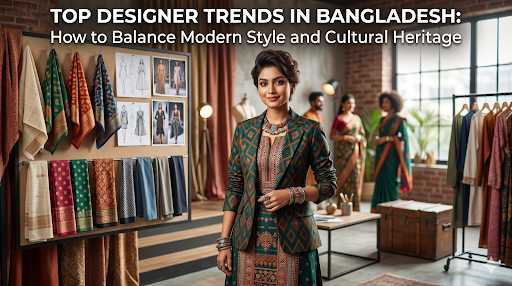
Top Designer Trends in Bangladesh: How to Balance Modern Style and Cultural Heritage
The fashion landscape in Bangladesh is experiencing an extraordinary era of transformation. Modern women are no longer choosing between global fashion trends and traditional heritage garments. Instead, they are demanding a thoughtful intersection of both: a style philosophy where cultural roots are honored through progressive, contemporary design. Women's fashion in Bangladesh has evolved from a simple choice between East and West into something far more sophisticated: a wardrobe that holds both without contradiction.
This evolution has given rise to premium fusion wear and elevated traditional attire. Today’s wardrobe staples seamlessly marry the intricate craftsmanship of local heritage with clean, minimalist cuts that fit a global lifestyle. Whether you are building a wardrobe for festive celebrations, formal corporate events, or elegant daily wear, here is how to master the perfect balance between modern style and cultural heritage.
How Bangladesh Fashion Is Evolving in 2026
Bangladesh's position in the global fashion conversation has shifted dramatically. The country that built its reputation on textile production is now producing design-led fashion that is catching the attention of style-conscious consumers both locally and internationally. Seeshell fashion represents exactly this shift — a brand that began with a deep understanding of local craft traditions and has built a contemporary design language around them rather than in spite of them.
The modern Bangladeshi woman is consuming fashion differently in 2026. She is researching before she buys, comparing quality and craftsmanship rather than simply price, and gravitating toward brands that can articulate a genuine design philosophy. Women's fashion in Bangladesh is no longer driven purely by occasion — it is driven by identity. What a woman wears has become an expression of how she sees herself in relation to her culture, her city, and the wider world she participates in.
1. The Rise of Contemporary Fusion Wear
Fusion wear is the ultimate expression of the modern Bangladeshi fashion movement. It takes the familiar comfort and aesthetic of traditional attire and filters it through a lens of contemporary global tailoring. A prime example of this trend is the evolution of the classic tunic into structured silhouettes and specialized coordinates. Instead of standard pieces, modern design houses are focusing on asymmetrical hems, clean structural lines, and sophisticated sleeve details.
Incorporating premium matching sets into your wardrobe allows you to project an air of effortless luxury while staying perfectly aligned with modest styling parameters. To explore an extensive, curated landscape of these forward-thinking designs, discover the complete collection ofexclusive women's fashion engineered for the contemporary lifestyle.
Balancing Modesty and Modern Style — The Bangladeshi Woman's Wardrobe
Premium ladies fashion in Bangladesh has always navigated a distinct set of priorities — modesty, cultural alignment, quality, and contemporary relevance — that fashion from other markets rarely has to balance simultaneously. What is remarkable about where Bangladeshi fashion is in 2026 is that these priorities are no longer in tension with each other. They have become the defining creative challenge that produces the most interesting design outcomes.
The Bangladeshi woman's wardrobe in 2026 is built around pieces that are intentional from every angle — garments that look as considered from the back as from the front, that hold their shape and colour through regular wear, and that move between the family home, the office, and the social occasion without requiring a complete change of outfit or identity. Modesty and modern style are not a compromise in this wardrobe — they are the same thing.
2. Elevating Traditional Crafts with Minimalist Aesthetics
Historically, luxury traditional wear in Bangladesh was synonymous with heavy, ornate embellishments. However, the current high-end designer trend leans heavily into understated luxury. The focus has shifted from overwhelming glitter to the texture of the fabric itself and the placement of delicate artisan details. What to Look For: Tonal Embroidery: Intricate hand-embroidery or needlework that matches the exact color tone of the fabric. This creates a rich, multi-dimensional texture that looks incredibly sophisticated without being loud. Premium Material Bases: True elegance starts with the canvas. High-grade georgettes, rich linen weaves, breathable viscose, and raw silks provide an organic drape that artificial materials simply cannot replicate.
Artisan Motifs: Look for clothing that reinterprets traditional motifs—such as jamdani patterns or classic floral vines—into clean, scattered minimalist layouts across modern shirts, tops, and two-piece ensembles.
Cultural Heritage in Contemporary Fashion — Embroidery, Karchupi and Zardosi
Traditional women's clothing in Bangladesh has always carried an extraordinary vocabulary of craft — karchupi needlework, zardosi embellishment, tambour bead techniques, and hand embroidery traditions that have been passed between artisan communities for generations. What contemporary Bangladeshi fashion is doing with this vocabulary in 2026 is genuinely exciting: taking techniques that were once reserved for heavy formal occasion wear and recontextualising them within lighter, more wearable contemporary silhouettes.
A karchupi motif applied to the collar of a structured tunic top reads as modern and refined rather than traditionally formal. Zardosi work placed deliberately at the hem of a co-ord set bottom creates visual interest without overwhelming the overall design. These are not compromises between heritage and modernity — they are the deliberate, skilled choices of designers who understand both traditions deeply enough to bring them into productive conversation with each other.
3. How to Build a Heritage-Forward Wardrobe
Balancing tradition and modern style doesn't require overcomplicating your outfits. You can easily build a versatile, high-fashion wardrobe by treating cultural clothing with contemporary styling rules: Deconstruct Your Traditional Outfits: Do not feel restricted to wearing matching traditional ensembles exactly as they are bought. Pair a richly textured ethnic top or tunic with clean, modern straight-leg tailored trousers. Stick to a Refined Color Palette: While vibrant colors are a hallmark of cultural celebrations, integrating rich neutrals—such as deep emeralds, soft ivories, muted slate greys, and rich monarchy blues—gives your ethnic garments a timeless, high-fashion edge that moves seamlessly across casual and formal settings. Accessorize Globally: Ground a highly traditional garment by pairing it with sleek, minimalist modern accessories. A structured leather tote bag, minimalist block heels, or simple geometric jewelry instantly updates a heritage look for a cosmopolitan environment. By focusing on these versatile intersections, you curate a sustainable, premium closet that celebrates your cultural identity while satisfying your individual, modern aesthetic.
Men's Fashion Trends in Bangladesh — Panjabi to Modern Ethnic Wear
Men's fashion online in Bangladesh tells a parallel story to the women's fashion evolution — one that is equally compelling and often overlooked in broader fashion conversations. The Bangladeshi man's wardrobe in 2026 is no longer a simple binary between the panjabi worn for occasions and the shirt worn for everything else. What is emerging is a more considered approach to both — better quality panjabi with refined embellishment restraint, and premium shirts with genuine fabric integrity and design intention.
The most style-conscious Bangladeshi men are investing in pieces that bridge these two worlds — a structured band collar shirt that references the clean neckline aesthetic of traditional panjabi design, or a contemporary kabli worn over a slim-fit kurta rather than the traditional full formal ensemble. Seeshell fashion's men's collection reflects this evolution directly, offering pieces that speak to both tradition and contemporary relevance without forcing a choice between them.
Summary Checklist: Blending Tradition with Modernity
Use this quick guide to evaluate how well your current wardrobe balances cultural roots with modern styling:
| Fashion Element | Traditional Footprint | Modern Transformation |
| Garment Silhouette | Classic boxy cuts, rigid structures | Asymmetrical hemlines, tailored tunics, fluid co-ords |
| Embellishment Style | Heavy zari, sequins, all-over bright prints | Minimalist tonal embroidery, delicate cuff & collar accents |
| Color Coordination | High-contrast multi-color combinations | Monochromatic matching sets, rich elegant solid tones |
| Overall Vibe | Strictly occasion-locked traditional wear | Multi-functional wardrobe staples for global lifestyles |
Why Seeshell Is Leading Ethical Fashion in Bangladesh
Ethical fashion for women in Bangladesh is not a peripheral concern — it is increasingly central to how fashion-conscious consumers make purchasing decisions. The question of where a garment was made, by whom, and under what conditions has moved from niche awareness into mainstream consideration. Seeshell's position as a fashion brand in Gulshan, Dhaka, is built on a direct answer to that question: clothing made with genuine care for craft quality, fair artisan recognition, and a design philosophy that values longevity over disposability.
Ethical fashion in Bangladesh for women means something specific at Seeshell — it means that the karchupi artisan whose needlework appears on a Seeshell top is recognised as a skilled contributor to the final product, not an anonymous production input. It means that fabric quality is chosen for how it wears over years, not just how it photographs. And it means that every design decision is made with the understanding that the woman wearing it deserves a garment that respects her intelligence, her aesthetic, and her values simultaneously.
Frequently Asked Questions:
What are the current designer clothing trends for women in Bangladesh?
The dominant designer trend focuses on fusion wear and understated luxury. Modern women are gravitating toward premium monochromatic co-ord sets, tailored tunic tops featuring subtle artisan embroidery, and outfits that blend traditional South Asian craftsmanship with clean, Western-inspired tailoring.
How can I make traditional clothing look more modern?
To make traditional attire look modern, pair cultural pieces with contemporary separates such as an embroidered tunic over crisp white tailored trousers, opt for garments with minimalist tonal details rather than heavy sequins, and style the outfit with sleek, minimalist modern footwear and structured accessories.
Where can I shop for premium designer women's wear online in Bangladesh?
For an exclusive collection of luxury modest fashion, contemporary fusion pieces, and beautifully tailored traditional menswear and womenswear, you can browse and shop directly on the Seeshell Online Boutique with secure nationwide delivery.